From Charles Mingus to Chet Baker, Chick Corea, Dizzy Gillespie and Carla Bley: journalist Mario Di Caro tells the story of the great jazz musicians during the years when gunshots echoed through the streets of Palermo and the city recorded more than one death a day.
Published by Kalós as part of its I Lapilli book series, the novel will be available in bookstores from September 11.

Mario Di Caro
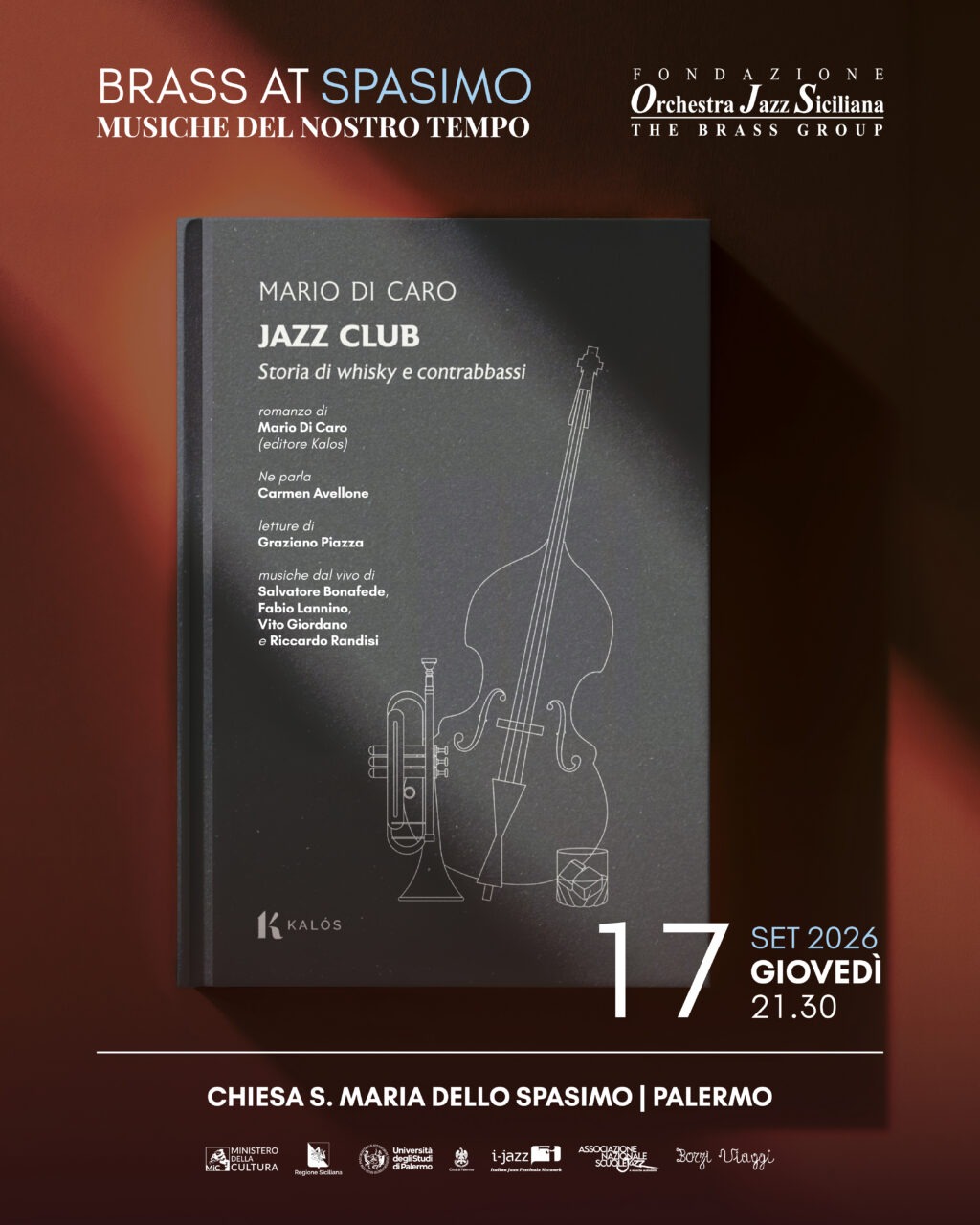
As part of Brass at Spasimo 2026 – “Musiche del Nostro Tempo”, a new event will bring the spotlight to Mario Di Caro’s latest book, Jazz Club. Storia di whisky e contrabbassi, published by Kalós. The presentation will take place on September 17 at 9:30 p.m. at the monumental complex of Santa Maria dello Spasimo in Palermo.
The Fondazione Orchestra Jazz Siciliana – The Brass Group continues to keep the Spasimo alive with major cultural events, bringing music, art and culture to the heart of Palermo for both citizens and visitors through Brass at Spasimo 2026: concerts, original productions, major international artists, young talents and new musical contaminations, creating opportunities for both the local community and cultural tourism.

Maestro Ignazio Garsia
Jazz as a meeting point, improvisation, research and freedom: this is one of the defining spirits of Brass at Spasimo 2026 – Musiche del Nostro Tempo, the programme of the Fondazione Orchestra Jazz Siciliana – The Brass Group, which throughout September keeps the monumental complex of Santa Maria dello Spasimo alive with concerts, original productions, young talents, jam sessions and leading figures from the national and international music scene.
Following a series of events that have attracted enthusiastic audiences and received widespread acclaim, the September programme now enters one of its most intense phases, offering a rich succession of evenings in which the different dimensions of the project come together: the freedom of improvisation, a strong focus on the new generations, major international performers, and events dedicated to the history and culture of jazz.
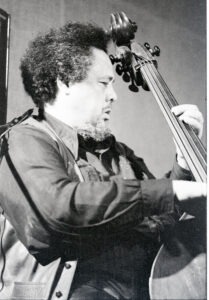
Charles Mingus
A story of jazz, Palermo and resistance
The meeting with Mario Di Caro, who will present Jazz Club. Storia di whisky e contrabbassi, will be much more than a traditional book presentation. It will be a journey through the great names of jazz and through one of the most turbulent periods in Palermo’s history.
From Charles Mingus to Chet Baker, Chick Corea, Dizzy Gillespie and Carla Bley, journalist Mario Di Caro recounts the great figures of jazz during the years when gunfire echoed through the streets of Palermo and the city recorded more than one death a day.
Published by Kalós as a new title in the I Lapilli series, Jazz Club. Storia di whisky e contrabbassi has been available in bookstores since September 11.
The presentation will combine words and live music, featuring Carmen Avellone, Salvatore Bonafede and Riccardo Randisi on piano, Vito Giordano on trumpet and flugelhorn, Fabio Lannino on electric bass and double bass, with readings by Graziano Piazza.
The evening will bring the stories of legendary musicians to life through music, memories and anecdotes, creating a dialogue between the written word and the sound of jazz.
The great names of jazz and the story behind the music
The pages of the novel are filled with stories and behind-the-scenes episodes involving some of the greatest musicians in jazz.
There is the story of Charles Mingus, who arrived without his double bass and, just two hours before the concert, had to borrow one from a member of the audience. It was a terrible instrument—and Mingus made his opinion known publicly. The rest is a story worth reading.
There is Chet Baker, who drove pianists away but then gave the audience an unforgettable My Funny Valentine; Miles Davis, who demanded a limousine and then did not use it; Frank Sinatra, with his astonishing fee and his impossible-to-find Evian water; and Chick Corea, who nearly pushed the concert organisers into the red.
There are also Duke Ellington and Aretha Franklin performing before thousands of young people; Dizzy Gillespie, who hints at singing before returning to his flugelhorn; Carla Bley and Steve Swallow; and then Max Roach, Dee Dee Bridgewater, Art Blakey and Toots Thielemans.
But the story of the musicians unfolds against the backdrop of a changing Palermo.
The Teatro Massimo closes its doors and begins a sleep that will last twenty-three years. The historic centre empties out, the Mafia spreads terror, concrete replaces villas and erases fragments of collective memory.
In the troubled Palermo of the 1970s, four friends walk down into a basement and decide that jazz will be played there.
It is this city—wounded, contradictory, yet endlessly capable of inventing new paths—that runs through Jazz Club. Storia di whisky e contrabbassi.
From a basement to a jazz institution
The central character is Ignazio, a figure inspired by Ignazio Garsia, pianist, composer and founder of the Brass Group.
Ignazio is an obstinate musician who looks at an empty basement and sees a stage, a piano, chairs, a bar and, above all, a large brass orchestra like the one he once heard at the Tivoli.
Around him, Palermo seems to be living two stories at once: murders, poorly planned suburbs and an abandoned historic centre on one side; and, on the other, the city of those who stubbornly continue to build culture.
Ignazio wants to do exactly that.
While gunshots can be heard outside, he dreams of a concert every day.
Jazz thus becomes the soundtrack to an act of determined resistance.
But before the great international names, there is a basement.
Palermo, 1974: a stage, a piano, whisky served in plastic glasses and a room so full that people end up sitting on the floor for Brazilian guitarist Irio De Paula. The queue stretches out onto the street, and an additional performance is announced.
It is the beginning of an adventure destined to change the musical life of Palermo.
Mario Di Caro tells the backstage stories of the great names of jazz, but at the same time he crosses five decades of Sicilian history, bringing together characters and memories, concerts and everyday life, successes, friendships and sheer determination.
In the background stands Palermo: restless and contradictory, marked by the season of the massacres and by crumbling suburbs.
At the centre is jazz—not simply as a musical genre, but above all as an expression of freedom and the possibility of creating something while the noise outside seems to prevail.
The story opens in 2024, when Ignazio, now an elderly man, returns to the closed shutter of the old club on Via Duca della Verdura.
Behind it, there are only empty walls and dust.
But a single note turns back the hands of time.
The author
Mario Di Caro is a journalist with la Repubblica, based in Palermo, where he covers culture and entertainment.
He is the author of Mezzanotte al Teatro Massimo (Di Girolamo, 2007) and La capitana dell’isola di nessuno (Mursia, 2015).
Jazz Club. Storia di whisky e contrabbassi is his third novel.
Music: Carmen Avellone, Salvatore Bonafede, Riccardo Randisi, Vito Giordano, Fabio Lannino
Readings: Graziano Piazza
More information: www.thebrassgroup.it | www.bluetickets.it
About The Author